
Listen: Good Grief. Podcast, Episode 9
In this episode of Good Grief., Aundrea Sayrie explores Black grief, the toll of repeated loss and racial injustice, and the psychological refuge mechanisms folks develop to survive what sometimes feels impossible to process.
In today’s episode of Good Grief., I will be talking about the historical, compounded, and complex trauma known as “Black grief.”
It is well documented that premature loss, disenfranchised loss, and centuries of intergenerational trauma impact Black Americans at disproportionate rates.
Headlines like the ones currently circulating about Nolan Wells can trigger this type of grief.
And while we are grieving, we are often asked:
Why do you have to make it about race?
Because, race isn’t something we get to turn off.
It is woven into our daily experience.
It is the purposefully curated, systematic racial nightmare that takes a toll on us mentally and physically.
And it isn’t just what happened to Nolan Wells.
It is all the ones before him.
It is the racial inequalities we navigate as a community at every corner.
It is the constant calculations.
The hypervigilance.
The physical toll that sits at the root of so many of the health concerns disproportionately affecting Black people.
So yeah.
I, for one, am going to talk about it.
With other types of grief, grace is extended.
With Black grief, we, as a collective, are expected to remain composed, get up, and go to work in the morning.
No period of bereavement.
No cards.
No acknowledgment.
No reparation of any sort.
And explaining what it is like to bear this particular cross has routinely fallen on deaf ears.
So, like all types of grievers, we find a way to cope.
We adapt.
We develop tools of resilience.
Resilience, because the alternative, whether it happens fast or slow, is death.
So how does one move toward resilience as a griever?
Having reflected on the many different types of grief I’ve experienced, I’ve realized there are certain tools I’ve used repeatedly that have allowed me to pivot from victim to victorious, time after time.
Over the next few episodes, I want to talk about different forms of what I like to call “psychological refuge.”
A protective measure of the brain that allows us to create some form of mental sanctuary while navigating the hard parts of life.
The first tool is “absurdity.”
The use of absurdity as a coping mechanism is about seeing the flaws between reality and desire very clearly.
It is creating an artistic platform as a means of release when other means of influence may not be available.
Artists have done this throughout history.
That is using art as a provocative means to create awareness and conversation.
And sometimes, at its best, it becomes a catalyst for positive and lasting change.
Art isn’t the only way to use this mechanism.
Absurdity can also show up as dark humor.
“Gotta laugh to keep from crying.”
I have often leaned into that which is irrational, using art to help me process all that overwhelms and grieves me.
Poetry, especially.
My poetry often tackles topics of social injustice or unrest. Nolan’s life ending in this manner grieves me. I paused, I wept, my heart goes out to his family.
I don’t know if Nolan Wells was murdered.
I don’t know if Nolan Wells drowned.
That isn’t my point.⁵
My point is that another young Black life is gone under circumstances that remain deeply questioned and deeply contested.
What I do know is that, from the very beginning of this situation coming to light, it appears the case may have been mishandled.
There has been serious division.
Serious contention.
Conflicting information.
New evidence.
And questions about whether the circumstances were fully investigated.
And yet, we are expected to move along.
Good Grief.
I didn’t know Nolan personally.
But we are kindred.
Mothers of Black children know what it is to do a quick mental calculation when our children receive a simple birthday invitation.
Who’s going to be there?
Who is supervising?
What do I know about this family?
And we are all too familiar with that immediate ancestral alarm that starts going off the moment we realize our child may be the only one.
I have non-Black friends I have absolutely trusted with my children.
And still do.
So it isn’t an automatic no.
But it does mean additional considerations.
Because too often, too high a price has been paid.
This happens too often for me not to speak up.
Not everyone is going to like me doing so.
But not everyone’s going to like me anyway.
And that is, truly, none of my concern.
The children are.
All of them.
That is one of the reasons I have such great respect for Ms. Rachel.
If you know, you know.
So yeah.
Absurdity is absolutely a tool.
It is one I have often used to navigate Black grief.
And as a tool, it has been empowering.
It has given me somewhere to put the things I couldn’t always change.
Somewhere to put the things I couldn’t always say.
Somewhere to put the things that were simply too much to carry without some form of release.
Oftentimes that refuge has been poetry.
Sometimes humor.
Sometimes making the absurd visible enough that other people can’t pretend they don’t see it.
Over the next episode, I want to unpack psychological refuge mechanisms a little more and talk about the different ways we protect our minds while moving through the hard parts of life.
Until then, be well.
Black Grief and Finding Psychological Refuge
A moment of silence for Nolan Wells
And the many Black lives before him
Lost,
with shared parallels
“We hold these truths to be self-evident, that all men are created equal, that they are endowed by their Creator with certain unalienable Rights, that among these are
Life,..”
life
A collective sigh
By the community
Again we are the bereaved
And collectively we grieve
The loss of another one of our own
Lost
circumstances unjust,
Circumstances unknown,
Another young man that deserved to grow up
Gon’
Recovered phone,
Missing messages,
Blunt force trauma,
To the back of the head
She, he, them, they… said
Inconsistency after inconsistency
Was… evidence reviewed critically?
He deserves a thorough investigation
Not 5 inefficient days of deliberation
Red flags astounding
A verdict of a death “consistent with drowning”
Required 23 pairs of turning a blind eye
Grand jury
A grand illusion
Of grand design
Grand theater
A Grand lie
Win or lose
The only request was full transparency
Too difficult a task
…apparently
But,
God is witness
and ultimate judge
He hears the cry of innocent blood
He keeps account and accurate tally
We haven’t seen the grand finale
Fire and brimstone
Mississippi burning
Justice
before adjourning
No rest for the wicked
No justice
No peace
Children deserve to grow old,
no matter their race, identity, or creed
Aundrea Sayrie is a writer, narrator, advocate, and the creator of Good Grief., a reflective platform exploring grief, belonging, identity, healing, and intentional living through storytelling and spoken reflection. Drawing from lived experience, community advocacy, and creative expression, her work centers emotional honesty, connection, and giving language to the experiences many people struggle to name. She truly believes the only thing worse than hurting is hurting alone and hopes to be a companion to others through their healing journey.
If you would like to support her work as an independent writer and creative, donations can be sent via Cash App: $Asayrie
Any views or opinions expressed in Good Grief. do not necessarily reflect the views or opinions of the Watershed Voice staff or its board of directors.
Author

Related Articles
Listen: Good Grief. Podcast, Episode 8
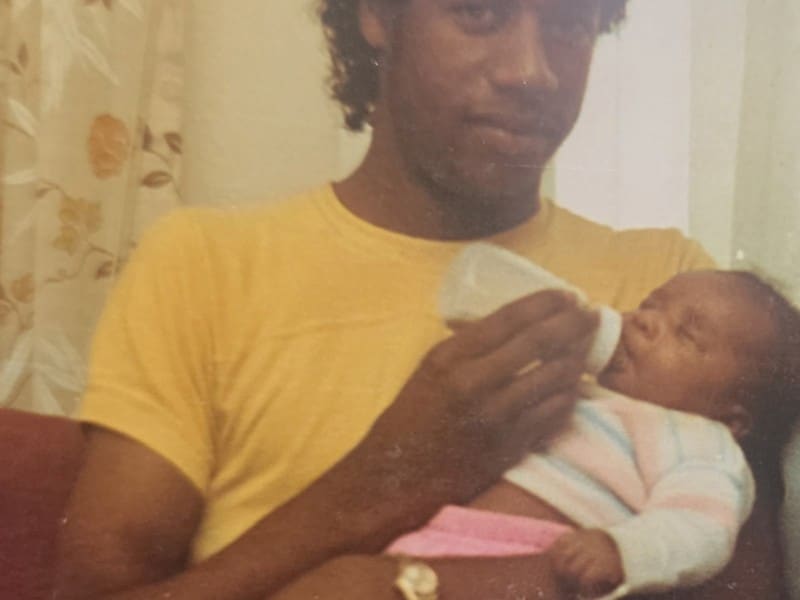
In the eighth episode of the Good Grief. Podcast, Aundrea Sayrie reflects on her late father who died just over a year ago. Aundrea writes about memories, trials, and tribulations related to her father, and how she has navigated through her grief over the past year.
Listen: Good Grief. Podcast, Episode 7
Grievers are all around us and most of the time, we have no idea.
In recognition of National Grief Awareness Day, August 30, this episode of Good Grief. explores what awareness asks of all of us.
Listen: Good Grief. Podcast, Episode 6
We’re told to grieve alone, in private, but why? In the sixth episode of the Good Grief. Podcast, Watershed Voice’s Aundrea Sayrie discusses what grief is, how we do it, and why we need others to witness it.
