
Listen: Good Grief. Podcast, Episode 6
We’re told to grieve alone, in private, but why? In the sixth episode of the Good Grief. Podcast, Watershed Voice’s Aundrea Sayrie discusses what grief is, how we do it, and why we need others to witness it.

We’re told to grieve alone, in private, but why? In the sixth episode of the Good Grief. Podcast, Watershed Voice’s Aundrea Sayrie discusses what grief is, how we do it, and why we need others to witness it.

Things We Thought We Knew About Grief | Myth #4: “We should grieve in private.”
“Fix your face.”
“Stop all that crying.”
“Go to your room until you’ve gotten yourself together.”
“Be strong.”
Many of us have heard phrases like this throughout our lives, and we unconsciously learned that difficult emotions were acceptable as long as they were experienced privately.
And grief?
Grief was definitely supposed to be private.
We could hurt.
It was “respectable” to not make anybody else uncomfortable with our mourning.
In today’s episode of “Things We thought We Knew About Grief” we’re discussing myth #4: “We should grieve in private.”
But before we get into that, I want to make an important distinction.
Grief and mourning are not the same thing.
Grief is the internal experience of loss.
Mourning is the outward expression of that grief.
It’s the crying.
The talking.
The storytelling.
The rituals.
The music.
The movement.
The posting.
The praying.
The screaming.
The silence that somebody else is allowed to sit beside.
Mourning is what happens when some of what we’re carrying on the inside is given somewhere to go.
And we have been taught to suppress that.
I know I was.
When my grief became more than I knew how to carry, I was a blubbering, crying mess.
And I mean that literally.
I cried at the drop of a hat.
In front of people I loved.
In front of friends.
In front of strangers.
At first, I tried not to.
I would pull myself together. Swallow it. Get control of myself.
Because even in the middle of being absolutely overwhelmed by grief, part of me was still worried about how my grief was affecting everybody else.
Still, at times I’d post on Facebook because it had become so overwhelming that I was afraid of what holding it all in would do.
And even then, I worried.
Are people tired of hearing about this?
Am I sharing too much?
Am I making people uncomfortable?
That fear wasn’t imaginary.
As I shared in the last episode, I’d already experienced this with the bible study teacher; that people could become uncomfortable with my expression of grief.
So there I was.
Already carrying something unbearably heavy.
And carrying the additional burden of trying to make my grief easier for everybody else.
I was burdened.
And I was alone.
Surrounded by people;
Family.
Friends.
Church members.
Coworkers.
And still I felt so alone.
Grief needs to be witnessed.
Being witnessed doesn’t mean everybody needs access to your grief.
It doesn’t mean posting everything publicly.
It doesn’t mean telling your story before you’re ready.
And it certainly doesn’t mean allowing people to turn your pain into gossip, advice, theology or a lesson about what you should be doing differently.
Being witnessed means there is somewhere you don’t have to perform being okay.
Somewhere you don’t have to fix your face.
Someone in whose presence you can tell the truth:
This hurts.
I’m angry.
I miss them.
I’m scared.
I don’t know who I am anymore.
I don’t know how to do this.
And sometimes, (and this is the part that can hurt) the people capable of witnessing your grief will not be the people you expected.
Loss has a way of revealing our relationships.
Some people we were certain would show up won’t know how.
Some will disappear.
Some will try to fix us because sitting beside pain they cannot repair makes them uncomfortable.
And then somebody you never expected will pull up a chair.
You’d be surprised who can become part of your village.
Find them.
Because mourning doesn’t have only one face.
For me, mourning often looked like crying.
A lot of crying.
But crying is only one language the body uses.
Grief is experienced throughout the body, so attempts to soothe that ache can cause one to seek whole-body experiences.
Sometimes mourning looks like talking.
Sometimes it looks like creating.
Working.
Moving.
Praying.
Eating.
Not eating.
Sleeping.
Not sleeping.
Having sex.
Seeking a continual high.
Drinking.
Using.
Anything that gives us relief, even temporarily, from what feels unbearable inside.
And I want to make another distinction here.
Not every behavior we use to escape pain is healthy mourning.
Some of the things we reach for can hurt us.
Some can hurt other people.
Some can become addictions of their own.
After having loving and sitting with people through addiction, listening to their stories and paying attention to what sits underneath some of these behaviors, I’ve learned to ask a different question.
Not just:
What’s wrong with you?
But:
What happened to you?
What are you carrying?
What are you grieving?
Sometimes the person who stays continually high is grieving.
Sometimes the person seeking connection through sex is grieving.
Sometimes the person who appears to have it all together is grieving.
And sometimes the most empathetic, highly sensitive person in the room has become exceptionally good at carrying everybody else’s emotions because nobody ever taught them what to do with their own.
We don’t always recognize grief when it isn’t crying.
Especially when we’ve been taught that even the crying should happen behind a closed door.
And this is why the myth that we should grieve privately can be so harmful.
Because when you suppress mourning, you don’t eliminate grief.
You eliminate some of the places grief can go.
The loss is still there.
The body still aches.
The nervous system still knows.
Your relationships are impacted.
It’s hidden in your habits.
Your sleep is impacted.
Your coping mechanisms show.
Even when you’ve gotten very, very good at fixing your face.
Human beings were never meant to experience every painful thing alone.
We have mourned together for generations.
We gather.
We tell stories.
We bring food.
We sing.
We pray.
We sit beside one another.
We hold hands.
We cry together.
We remember together.
Because there are some things another person cannot carry for us but they can sit beside us while we carry them.
That’s different.
And sometimes that’s everything.
So if you’re grieving right now, I want you to consider something.
Who gets the truth?
Not the polished version.
Not the “I’m hanging in there.”
Not the version designed to keep everybody else comfortable.
Who gets the truth?
If you don’t have that person yet, that doesn’t mean they don’t exist.
Your village may not look the way you thought it would.
Keep looking.
A trusted friend.
A grief group.
A therapist.
A faith community that knows how to sit with questions instead of rushing toward answers.
Someone who has survived a loss of their own and doesn’t flinch when yours enters the room.
Find somewhere you don’t have to fix your face.
Because grief may happen inside of us.
But mourning gives grief somewhere to go.
And healing begins when what we’ve been carrying privately is finally allowed to be witnessed.
That’s,
Good Grief.
Aundrea Sayrie is a writer, narrator, advocate, and the creator of Good Grief., a reflective platform exploring grief, belonging, identity, healing, and intentional living through storytelling and spoken reflection. Drawing from lived experience, community advocacy, and creative expression, her work centers emotional honesty, connection, and giving language to the experiences many people struggle to name. She truly believes the only thing worse than hurting is hurting alone and hopes to be a companion to others through their healing journey.
If you would like to support her work as an independent writer and creative, donations can be sent via Cash App: $Asayrie
Any views or opinions expressed in Good Grief. do not necessarily reflect the views or opinions of the Watershed Voice staff or its board of directors.
Author

Related Articles

Listen: Good Grief. Podcast, Episode 10
In this episode of Good Grief., Watershed Voice’s Aundrea Sayrie discusses psychological refuge tools, and the ways we learn to protect ourselves when life becomes too painful or overwhelming.
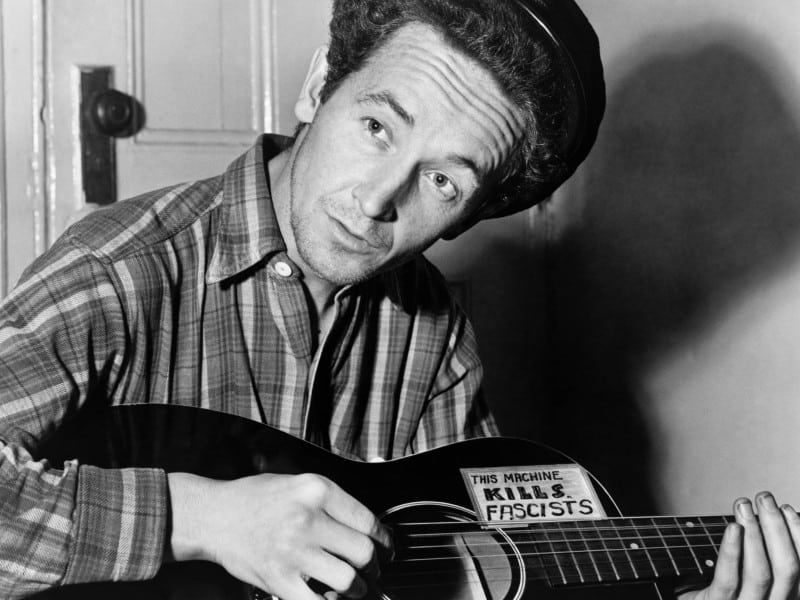
See ‘A Better World A Comin,’ Woody Guthrie tribute at the Riviera this month
A group of local musicians will present an evening of music by Woody Guthrie at the Riviera Theatre and Bar in Three Rivers on Saturday, October 24 at 7:30 p.m. Proceeds will benefit The Huss Project, a community center owned and operated by Three Rivers nonprofit *culture is not optional.

Geek Fest returns to Kalamazoo this weekend
Geek Fest returns to the Kalamazoo County Expo Center on Saturday, October 10, from 11 a.m to 3 p.m., bringing together gaming enthusiasts, artists, and fans of all things geek-related for an afternoon of activities.
One of this year’s featured guests is Roger Clark, the actor best known for portraying Arthur Morgan, the main protagonist of Rockstar Games’ critically acclaimed 2018 video game Red Dead Redemption 2.
