
Listen: Good Grief. Podcast, Episode 11
In this episode of Good Grief., Watershed Voice’s Aundrea Sayrie explores nostalgia as psychological refuge, and what happens when “before” becomes the place we go for comfort.

In this episode of Good Grief., we’re exploring nostalgia as psychological refuge, and what happens when “before” becomes the place we go for comfort.
Good Grief. Psychological Refuge: The Refuge of Nostalgia
It’s interesting telling people that my niche is grief. Reactions are mixed.
It wasn’t until recently that it dawned on me that what they may hear is:
Death.
Because grief is so often isolated to death and bereavement.
Yes, grief accompanies death.
But death does not own grief.
There are nearly 4 dozen life experiences that can trigger profound grief. The end of a relationship. An almost relationship. A friendship that changed. Retirement. A birthday. Moving away from a home or a city. Getting the promotion or dream job you wanted and realizing it requires you to leave behind people, routines, and a version of your life that you loved.
Sometimes even good change comes with grief.
Changes aren’t just boxes being checked off of a list, they affect people deeply and differently.
There’s a human being inside of every one of those transitions trying to figure out what life looks like now.
And that is the part of grief that interests me.
Helping the person having to navigate it. Sometimes alone. Sometimes without even realizing that what they’re experiencing is grief.
I’m not fascinated by loss. I’m interested in what helps us live through it.
Which brings me to our next psychological refuge.
The Psychological Refuge of “Before.”
Nostalgia.
Because when the present contains something we didn’t choose, or even something we did choose that came with unexpected loss…the past can become incredibly inviting.
Before the move.
Before the new job.
Before the kids grew up.
Before everything changed.
Sometimes we don’t want the past back because it was perfect.
We want it back because it was familiar.
So we ruminate.
We reread old messages.
Look through pictures.
Replay conversations.
Drive past places.
Remember.
We think about the first time we met someone…or the last time we saw them.
We revisit the restaurant.
Play the song.
Nostalgia can become a psychological refuge because, for a moment, it allows us access to something that change has made inaccessible.
A person.
A place.
A feeling.
A routine.
A version of our lives.
A version of ourselves.
And sometimes ourselves are what we’re grieving.
The woman before.
The employee who knew exactly where she belonged before retirement.
The parent whose children still needed her in the same way.
The person who lived in that old neighborhood, knew every street, and had a favorite grocery store and a familiar route home.
The version of ourselves who hadn’t yet learned what we know now.
And nostalgia says:
Come here.
You can visit.
Let me give you that version of your life for another minute.
And there is refuge in that.
Nostalgia can reconnect us to identity.
It can remind us of belonging.
It can help us remember that something mattered.
And sometimes looking backward helps us gather pieces of ourselves that we want to carry forward.
When life changes Some folks do almost the opposite.
Instead of going backward into memory, they become determined to remain unmoved in the present.
They become stoic.
I’m fine.
It is what it is.
Life goes on.
There’s nothing I can do about it.
And there can be wisdom in that… Safety even.
There is value in accepting what we cannot control, in regulating our reactions, maintaining perspective, and continuing to function when life doesn’t give us the luxury of falling apart.
In this way, stoicism gives grief a container.
But emotional restraint and emotional processing are not the same thing.
Sometimes what looks like acceptance is actually avoidance.
Sometimes “It is what it is” means:
I don’t know what to do. I don’t feel in control.
Nostalgia says:
Let me go back there for a minute.
Stoicism says.
Don’t feel anything. Just keep moving.
Two very different refuges.
One reaches backward toward feeling.
The other creates distance from it.
Both can protect us.
The question is whether they’re helping us process what happened, or helping us avoid having to.
Because once again:
The refuge isn’t the problem. Forgetting to leave the refuge is.
Nostalgia has its pitfalls.
The past has an advantage over the present being that already happened.
There is no uncertainty there.
We know how the story went.
Meanwhile, the present is still asking things of us.
Who are you now?
What happens next?
What do you do with this?
The past doesn’t require an answer.
So sometimes we stay there.
We reread the messages again.
Look at the pictures again.
Replay the conversation again.
And sometimes we edit the past while we’re there.
We remember the warmth and forget the loneliness.
We remember how much we loved someone and forget how often we were hurting.
We remember our old body and forget how critical we were of it when we actually lived in it.
We remember the old job and forget how badly we wanted to leave.
We remember what was familiar and confuse familiar with safe.
And eventually:
“I miss that” can quietly become “I cannot be okay because that is gone.”
That’s when refuge can start becoming residence.
And maybe the question becomes:
Am I visiting the past to remember? Or am I living there because I don’t know how to be here?
While I don’t want death to be the center of this conversation, death taught me something about nostalgia that I understand differently now.
After my mom died, one of my sisters absolutely needed more time with our mom’s belongings.
I didn’t understand that then.
Stoic people may feel the need to pack things away quickly.
Some people cannot touch anything, and need the room to stay exactly as it was.
Some aren’t ready to enter that space for months…or years.
My sister needed more time.
Looking back, I wish I had understood that better.
I carry some regret around it.
Thankfully, she moved many of my mother’s things into her own space, so ultimately, it’s okay.
But that experience taught me something.
We don’t all need the same amount of time with “before.”
And I think that applies far beyond death.
One person deletes the text thread after the breakup.
Another keeps it for years.
One person leaves the old house and never drives down that street again.
Another takes the long way home just to pass it.
One person retires and immediately builds a new routine.
Another wakes up months later still feeling like they’re supposed to be somewhere at 8:00.
There isn’t one correct way to experience loss.
The first act of self compassion is simply recognizing:
This change cost me something.
Even if it was necessary.
Even if I chose it.
Even if something better came afterward.
Even if everybody else thinks I should be over it.
Something ended.
Something changed.
And I miss something about what existed before.
Instead of immediately asking ourselves to move on, we can get curious.
What exactly do I miss?
Do I miss the job?
Or being needed?
Do I miss that relationship?
Or do I miss believing in what I thought it could become?
That last one matters, too.
Because sometimes we grieve things that never fully became ours.
The almost relationship.
The almost opportunity.
The almost future.
There may not be photographs of it.
There may not be boxes of belongings.
There may not even be people around us who recognize it as a legitimate loss.
But the heart knows when it had somewhere it thought it was going.
And when that future disappears, we can become nostalgic not only for what was,
but for what we believed would be.
Healing doesn’t require us to stop visiting before.
Some memories deserve to be sat inside for a while.
Some pictures deserve another look.
Some old messages might get reread.
Some versions of ourselves deserve to be remembered.
Go back.
Visit.
Laugh, cry.
Miss what was there.
Just remember that you live here.
The work of grief isn’t choosing between before and after, it’s learning what deserves to come with us.
Aundrea Sayrie is a writer, narrator, advocate, and the creator of Good Grief., a reflective platform exploring grief, belonging, identity, healing, and intentional living through storytelling and spoken reflection. Drawing from lived experience, community advocacy, and creative expression, her work centers emotional honesty, connection, and giving language to the experiences many people struggle to name. She truly believes the only thing worse than hurting is hurting alone and hopes to be a companion to others through their healing journey.
If you would like to support her work as an independent writer and creative, donations can be sent via Cash App: $Asayrie
Any views or opinions expressed in Good Grief. do not necessarily reflect the views or opinions of the Watershed Voice staff or its board of directors.
Author

Related Articles

Listen: Good Grief. Podcast, Episode 10
In this episode of Good Grief., Watershed Voice’s Aundrea Sayrie discusses psychological refuge tools, and the ways we learn to protect ourselves when life becomes too painful or overwhelming.
Listen: Good Grief. Podcast, Episode 9
In this episode of Good Grief., Aundrea Sayrie explores Black grief, the toll of repeated loss and racial injustice, and the psychological refuge mechanisms folks develop to survive what sometimes feels impossible to process.
Listen: Good Grief. Podcast, Episode 8
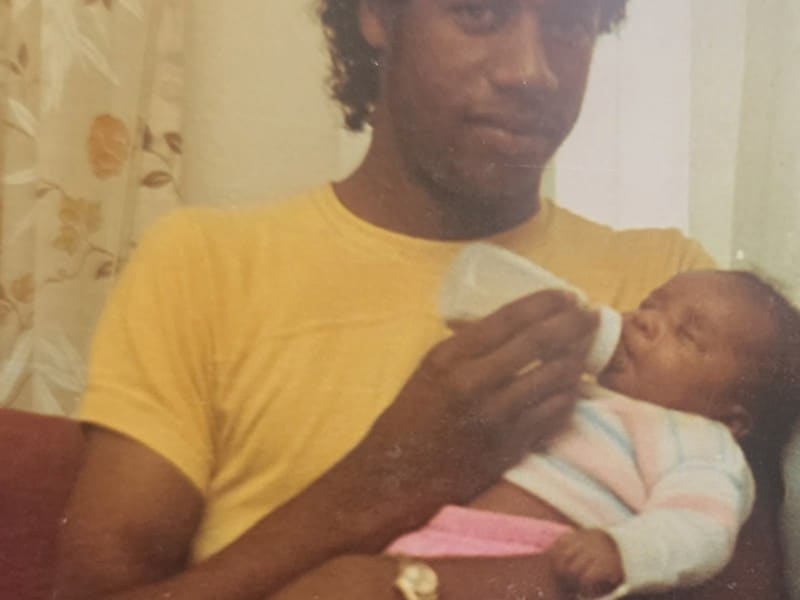
In the eighth episode of the Good Grief. Podcast, Aundrea Sayrie reflects on her late father who died just over a year ago. Aundrea writes about memories, trials, and tribulations related to her father, and how she has navigated through her grief over the past year.
