
Good Grief. The Mother Wound, Part Four
Watershed Voice columnist Aundrea Sayrie’s new series “Good Grief.” explores how loss lives in everyday lives, and its impact on mental health. In The Mother Wound, Part Four, Sayrie writes, “Sometimes the body carries what the mind learned to minimize” but “healing begins when we realize that the nervous system can learn new experiences too.”

Good Grief. is a dedicated space to explore how loss lives in our everyday lives and its impact on mental health. Written through the lens of lived experience, it examines the quiet ways grief shows up. In our bodies, our relationships, and the patterns we carry. Creating space for awareness, honesty, and repurposing pain.
If you haven’t read any of the previous parts of The Mother Wound series, click here.
The Body Remembers*
Some people think grief only lives in memory.
But often…
it lives in the body.
In tightened shoulders.
In shallow breathing.
In exhaustion that sleep alone does not fix.
Sometimes the body carries what the mind learned to minimize.
Children raised in emotionally unpredictable environments often learn to stay alert long before they understand why.
Trying to sense danger before it arrives.
The nervous system adapts to instability.
And over time, survival can begin to feel normal.
growing research around trauma, stress, and epigenetics suggests that chronic emotional stress can impact not only the mind, but the body as well. Those experiences of fear, neglect, instability, and prolonged emotional distress may shape nervous system responses across generations.
Many people who experienced emotional neglect or chronic criticism early in life grow into adults who struggle with:
* chronic anxiety
* emotional dysregulation
* perfectionism
* burnout
* dissociation
* difficulty resting
* people pleasing
* digestive issues
* sleep disturbances
* hyper-independence
* emotional shutdown
Not because they are weak.
Because their bodies learned survival before safety.
And often, those patterns become so familiar they are mistaken for personality.
“I’m just an overthinker.”
“I’ve always been anxious.”
“I just struggle relaxing.”
But sometimes what people call personality…
is adaptation.
Healing from these experiences is not about blaming parents for every struggle.
Nor is it about pretending painful experiences did not have impact.
It is about becoming honest enough to recognize when survival patterns are still running the body long after the danger has passed.
healing begins when we realize that the nervous system can learn new experiences too.
And while there is no single solution for grief, trauma, or emotional wounds, there are approaches that can help people reconnect with themselves more safely and intentionally.
Some therapeutic approaches often used in trauma and emotional healing include:
Cognitive Behavioral Therapy, Dialectical Behavioral Therapy, Eye Movement Desensitization and Reprocessing, and Motivational Interviewing.
Healing also happens outside of formal therapy.
Sometimes it begins through:
* rest
* safe relationships
* creativity
* grief support
* storytelling
* body awareness
* community
* boundaries
* learning to feel without judgment
* and being emotionally safe enough to exhale
The truth is…
many people have spent years trying to think their way out of wounds their bodies are still carrying.
And healing may require gentleness, not judgment.
patience not pressure.
compassion not criticism.
Because the body remembers.
BUT,
I’m a living witness that it can also learn safety again.
And if any part of this resonates with you…
please know:
survival responses are not character flaws.
Many of them were learned by people who were simply trying to protect themselves the best way they knew how.
Aundrea Sayrie is a writer, narrator, advocate, and the creator of Good Grief., a reflective platform exploring grief, belonging, identity, healing, and intentional living through storytelling and spoken reflection. Drawing from lived experience, community advocacy, and creative expression, her work centers emotional honesty, connection, and giving language to the experiences many people struggle to name. She truly believes the only thing worse than hurting is hurting alone and hopes to be a companion to others through their healing journey.
If you would like to support her work as an independent writer and creative, donations can be sent via Cash App: $Asayrie
Any views or opinions expressed in this column are those of the author and do not necessarily reflect the views or opinions of the Watershed Voice staff or its board of directors.
Author

Related Articles

Listen: Good Grief. Podcast, Episode 10
In this episode of Good Grief., Watershed Voice’s Aundrea Sayrie discusses psychological refuge tools, and the ways we learn to protect ourselves when life becomes too painful or overwhelming.
Listen: Good Grief. Podcast, Episode 9
In this episode of Good Grief., Aundrea Sayrie explores Black grief, the toll of repeated loss and racial injustice, and the psychological refuge mechanisms folks develop to survive what sometimes feels impossible to process.
Listen: Good Grief. Podcast, Episode 8
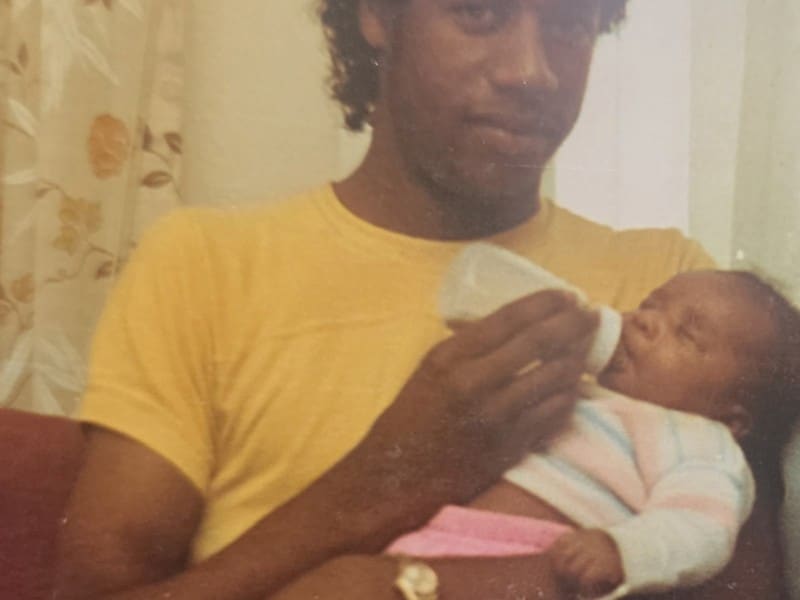
In the eighth episode of the Good Grief. Podcast, Aundrea Sayrie reflects on her late father who died just over a year ago. Aundrea writes about memories, trials, and tribulations related to her father, and how she has navigated through her grief over the past year.
