
Listen: Good Grief. Podcast, Episode 7
Grievers are all around us and most of the time, we have no idea.
In recognition of National Grief Awareness Day, August 30, this episode of Good Grief. explores what awareness asks of all of us.
Grievers are all around us and most of the time, we have no idea. In recognition of National Grief Awareness Day, August 30, this episode of Good Grief. explores what awareness asks of all of us.
National Grief Awareness Day, August 30
Awareness.
The state of knowing that something exists.
I’ve been sitting with that word lately.
Awareness.
Because apparently August 30th is National Grief Awareness Day.
Did you know that?
Because I didn’t.
I have been living life completely oblivious to its existence.
And now, I host a podcast about grief.
Good Grief.
There’s something almost comical about that.
But the more I thought about it, the more I realized how appropriate it actually is.
Because something doesn’t have to be new to be new to our awareness.
It can exist.
It can be happening all around us.
It can even be happening to us.
And we can remain completely unaware of what it is until something happens that makes us see it differently.
There’s a quote we see floating around:
Be kind, because you never know what someone else is going through.
I don’t know how many times I’ve read some version of that sentence.
But grief has made me understand it differently.
Because grievers are everywhere.
We pass them in grocery stores.
We sit beside them at work.
They pick their children up from school.
They make our coffee.
They laugh at our jokes.
They post pictures on Facebook.
They stand behind us in line.
They ask us how we’re doing.
And we have absolutely no idea that they are grieving.
Sometimes the person who looks completely put together is using every ounce of strength they have just to remain standing.
I know that now.
Awareness.
National Grief Awareness Day is observed on August 30th and was founded by grief advocate Angie Cartwright, who had experienced devastating losses of her own.
She chose August 30th because it was her late mother’s birthday.
And what she wanted was remarkably simple.
She wanted grief brought out of the dark.
She wanted us talking about the myths and clichés surrounding grief.
She wanted grieving people to receive support instead of being rushed, fixed or expected to silently move on.
And years later, here we are.
Still trying to do exactly that.
Because we have a tendency as a society to push uncomfortable things away.
Out of sight.
Out of mind.
We have a long history of doing this with things,,, and people… we don’t know how to deal with.
There was a time when people living with physical and intellectual disabilities and people experiencing mental illness were routinely segregated from their communities and institutionalized.
Put somewhere else.
Somewhere society didn’t have to see them.
Somewhere their existence didn’t challenge our comfort.
And while the history and harm of institutionalization is its own very serious subject, I think the impulse behind out of sight, out of mind is worth examining.
Because we still do versions of it.
Especially with pain.
We don’t necessarily know what to do with suffering that we cannot fix.
So we try to make it less visible.
We tell people to stay strong.
We change the subject.
We avoid saying the person’s name because we’re afraid we’ll make the griever sad…as if they had somehow forgotten.
We offer a familiar phrase because silence makes us uncomfortable.
“Everything happens for a reason.”
“They’re in a better place.”
“At least you had the time you had.”
“God needed another angel.”
“You have to move on.”
“Stay strong.”
But grieving people don’t need us to explain their grief away.
And they definitely don’t need the same old insensitive platitudes.
Sometimes there simply aren’t words.
And that’s okay.
Because grief doesn’t need the right words.
It needs space.
It needs understanding.
It needs permission.
It needs to be witnessed.
Sometimes the most compassionate thing you can say is:
I don’t know what to say. But I’m here.
That’s it.
You don’t have to fix it.
In fact, you can’t.
You don’t have to produce some profound sentence that makes the loss make sense.
You don’t have to make the grieving person feel better so that you can feel better.
You can simply acknowledge:
This happened.
This hurts.
I see you.
Compassion is free.
And yet I’ve learned that not everyone has it.
Or perhaps more accurately; not everyone chooses to practice it.
Because compassion requires something from us.
It requires us to tolerate another person’s discomfort without immediately trying to make it disappear.
It requires us to listen without comparing.
To sit without fixing.
To witness without turning away.
And that brings me back to awareness.
Because awareness changes responsibility.
Once I know something, I can’t unknow it.
Once I understand that grief doesn’t have a timeline, I have to reconsider telling someone they should be over it.
Once I understand that grief doesn’t always look like crying, I have to reconsider what a grieving person looks like.
Once I understand that people around me may be carrying losses I know nothing about, maybe I become a little slower to judge.
A little quicker to extend grace.
A little more willing to ask another question.
A little more comfortable sitting in an uncomfortable silence.
That’s what grief awareness is asking those of us who aren’t currently in the center of a loss.
Not expertise.
Compassion.
But if you are grieving, I want to speak directly to you for a minute.
August 30th does not have to be just another awareness day that passes through your social media feed.
If you choose, use it as a sacred pause.
Not because you need a designated day to remember your person.
You always remember.
Your body remembers.
Your life remembers.
But perhaps you intentionally make room for that remembrance.
You could volunteer for something that mattered to them.
Create a photo album or scrapbook.
Make a playlist of songs that remind you of them.
Write in a journal.
Plant a tree or something you can tend.
Create a new tradition in their honor.
Meditate.
Visit somewhere that mattered to the two of you.
Set a new personal goal and quietly dedicate it to them.
Join a grief support group.
Cook their favorite meal.
Tell their stories.
Say. Their. Name.
And if all of that sounds like entirely too much,,,
do nothing.
Seriously.
You don’t have to turn grief into a project.
You don’t have to make something beautiful from your pain that day.
You don’t have to perform remembrance for anybody.
Take the sacred pause.
That’s enough.
Breathe.
Cry if you need to.
Laugh if something funny comes to mind.
Be angry if you’re angry.
Let whatever is true be true.
Loss changes us.
There is a you on the other side of this moment that you haven’t met yet.
And perhaps that’s another kind of awareness.
Not discovering something that suddenly came into existence.
But finally being able to see what was there all along.
Be gentle with yourself, and others.
Compassion is free.
Spend it generously.
Good Grief.
Aundrea Sayrie is a writer, narrator, advocate, and the creator of Good Grief., a reflective platform exploring grief, belonging, identity, healing, and intentional living through storytelling and spoken reflection. Drawing from lived experience, community advocacy, and creative expression, her work centers emotional honesty, connection, and giving language to the experiences many people struggle to name. She truly believes the only thing worse than hurting is hurting alone and hopes to be a companion to others through their healing journey.
If you would like to support her work as an independent writer and creative, donations can be sent via Cash App: $Asayrie
Any views or opinions expressed in Good Grief. do not necessarily reflect the views or opinions of the Watershed Voice staff or its board of directors.
Author

Related Articles

Listen: Good Grief. Podcast, Episode 10
In this episode of Good Grief., Watershed Voice’s Aundrea Sayrie discusses psychological refuge tools, and the ways we learn to protect ourselves when life becomes too painful or overwhelming.

Listen: Good Grief. Podcast, Episode 9
In this episode of Good Grief., Aundrea Sayrie explores Black grief, the toll of repeated loss and racial injustice, and the psychological refuge mechanisms folks develop to survive what sometimes feels impossible to process.
Listen: Good Grief. Podcast, Episode 8
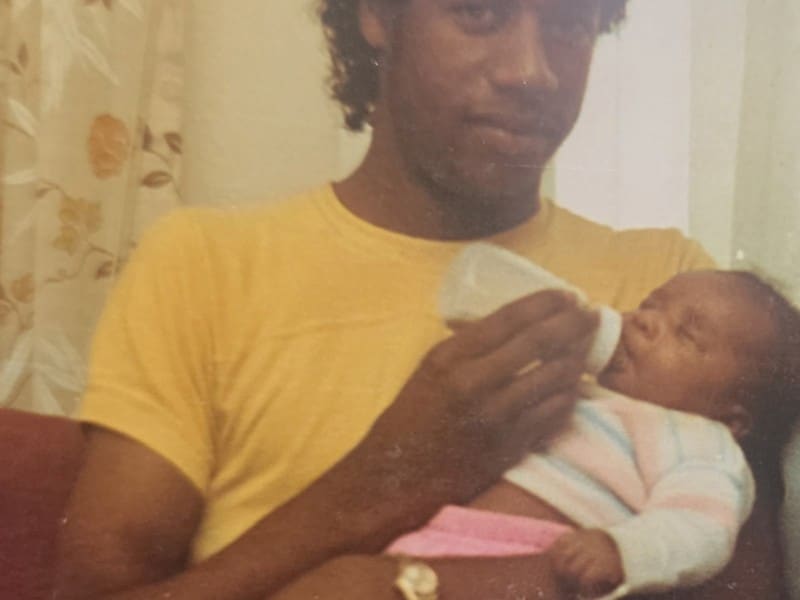
In the eighth episode of the Good Grief. Podcast, Aundrea Sayrie reflects on her late father who died just over a year ago. Aundrea writes about memories, trials, and tribulations related to her father, and how she has navigated through her grief over the past year.
